

Saturday, November 10, 2012
More Music

Friday, November 2, 2012
Live Tracks and Reed Forecast
For anyone who missed it, I've started a weekly reed strength forecast for the northeast U.S. You can find it at the top of the side bar to the right. It's based on relative humidity forecasts for New York City, Philadelphia, Boston, and Baltimore. You can learn more about it by visiting the explanation page.
Live from RIT 10.12.12
Following are three clips from a performance I did in at RIT and wanted to share. The band played fantastic, and though the recordings have a defnite bootleg quality to them you can still hear everything. Listen with headphones for the best experience.
Live from RIT 10.12.12
Following are three clips from a performance I did in at RIT and wanted to share. The band played fantastic, and though the recordings have a defnite bootleg quality to them you can still hear everything. Listen with headphones for the best experience.
Friday, October 26, 2012
Slurring Up the Overtone Series
Note: This post is meant for players already familiar with overtones, and who have already expanded their range to 3 octaves or more. For a more comprehensive approach to working on overtones try this post.
Ever tried slurring up the overtone series? You can pretty easily jump from the fundamental pitch (low note) to the first octave or from the fundamental to some higher pitch in the series, but most players find starting on anything higher in the series and trying to slur up from there to be impossible. However, once you get high enough (altissimo Bb) it becomes fairly easy to slur up, that is if you can play up there already.
Slurring altissimo Bb to C (first slur below) using the Bb series is fairly easy and a great starting point for this exercise. With a little experimentation and determination you will find you can slur up and down some of the partials right below the altissimo Bb mark as well, so on the Bb series that would be altissimo Ab to Bb, the second slur below. The slurs can be a lot easier if you start with the higher note slurring down and then come back up. With daily practice you can work all the way down to octave key Bb or even further down the series, which is no small feat. It is possible to go further down than notated in this exercise, however they will come much easier after you have can consistently execute the higher slurs . If you get stuck on a certain set of overtones, use a higher series such as the ones based off low B, C or Db to transition from a higher slur down to the more challenging slur.
The Why
This kind of practice works the muscles of the vocal tract in a more intense way than the run of the mill overtone playing. It's another level of overtone practice for those who have extended their range to 4 octaves or more and need an exercise to help them continue developing their muscles without the threat of embouchure tightening that can easily result from practicing prolonged periods in the extreme upper register.

Friday, October 19, 2012
Finger Technique and Push-ups
 |
| Nice and close |
Don't Glue Them Down
First, we'll deal with an early step to gaining speed and fluidity in technical playing, and that is to keep the fingers close or even touching the keys. There are a few different approaches to this. One is to practice slowly and consciously keep your fingers very close to the keys. Another is to watch yourself play in the mirror and work on correcting your fingers when they fly away from the saxophone. Ideally you want your fingers very close to the keys, even touching whenever possible. My personal favorite practice method, which I believe I've espoused here on the blog before, is to run some tape across your hands. Your hands should be in proper playing position, and the tape should attach to the saxophone above and below each hand. There shouldn't be any give in the tape, meaning if you try to lift your fingers away from the keys you will pull against the tape. Yes, you will need someone's help if you want to do both hands at the same time, and yes, you will have only the ability to the basic fingerings of the saxophone. Side keys and trill keys will most likely cause you to pull away from the tape. Play in this condition for at least half an hour if not an hour. Then take off the tape and see how you feel. Repeat this exercise on various days for the full effect.
Arms > Hands
Once your fingers are closer to the keys you will find your finger technique faster and smoother than otherwise, but you will still likely have difficulty with some of the saxophones more awkward fingerings. These include:
- left hand spatula keys: low Bb, low B, low C# and G#
- left hand palm keys, high D, high Eb, and high F
- right hand side keys: side Bb, trill C, high E, trill F# and high F#
- right hand pinky keys: low C and Eb
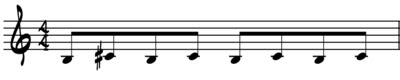
These all require either using a part of the hand other than the fingers to press them or some serious pinky finger strength. Many saxophonists play these primarily from the wrist, meaning there hand muscles do the majority of the work. This often results in insufficient speed and even tension and cramping, especially for trills. Instead try using your arm to effect the fingering change. The perfect example of this is trilling from low B to low C#. OK, so you would probably never play this in real music, but you very well might play from low B to low C# in an ascending phrase. Try playing back and forth between the two notes using just your pinky strength. You can do it but not very efficiently, and if done for any prolonged period will result in some tension and pain. Now use your entire arm and hand to slide your pinky back and forth between the low B and low C#. Using your arm and hand not only lets your pinky finger relax, but you can also increase the speed. Now apply that to the fairly long list of notes above.
One Last Suggestion
It can be very tempting to hold down the G# as you play the entire A scale, or hold down various left hand spatula keys in different musical examples. You will find that more tension exists in your hand as you hold down that G# or other spatula key and move your other right hand fingers. They will play more relaxed and more smoothly if you resist holding down your pinky finger and only press it down for the necessary notes. Another bad habit is to use C# to play G#. That requires more finger tension than you need and you will be able to play more smoothly just using the normal G# fingering. If clarinetists can do it, you can too.
Saturday, October 13, 2012
Quick Update
Exciting news - I'm hard at work on my first serious contribution to saxophone pedagogy, a method book titled A Complete Approach to Sound for the Modern Saxophonist. It is currently in editing and formatting stages, so it will be finished sometime in the next few months. It covers developing and maintaining an ideal tone and also the skills necessary to keep a good tone while playing for long periods of time, while executing technical passages, and while playing in the altissimo register. I'm planning on releasing it as an eBook and in print. I'm also planning sound clips for many if not all of the exercises. In researching and writing the book I've learned a lot about technical things like the anatomy of the vocal tract, but more excitingly I've made some discoveries only briefly covered in other places at least that I know of. I'll be releasing more details on the book as they become available. In the mean times expect more of the usual!
Friday, September 28, 2012
A Track from Kansas City
Today, I wanted to share one of the tracks from 12th Street Jump, the radio show I recorded with while in Kansas City this summer. Also, I wanted to thank everyone who supported me in the Charlie Parker Cutting Contest. The trip was great, and it was fun seeing how a radio show is recorded with all the cues and time sheets, etc.
This is Charlie Parker's Confirmation, and Jim Mair is playing alto on the head along with vocals by David Basse. The rhythm section is filled out by Joe Cartwright on Piano, Tyrone Clark on Bass, and Mike Warren on Drums. I play second after the vocal solo at about 1:40.
This is Charlie Parker's Confirmation, and Jim Mair is playing alto on the head along with vocals by David Basse. The rhythm section is filled out by Joe Cartwright on Piano, Tyrone Clark on Bass, and Mike Warren on Drums. I play second after the vocal solo at about 1:40.
Friday, September 21, 2012
Theo Wanne AMMA

Response
The AMMA is completely new to me, and the particular model I play tested was the metal "vintified" model for Tenor. The most striking aspect of this mouthpiece is the speed of its response. The piece is so light on its feet it gives you the feeling you can do whatever you want as long as your fingers are up for it. The kind of response I'm talking about is in the simple passage of one note to the next. Each note pops, meaning from behind the horn you get immediate clear auditory feedback giving the mouthpiece its very responsive feel. This characteristic is true throughout all registers of the horn and carries over to articulation and large interval jumps, which both feel markedly easy to execute.
The feeling of blowing through the mouthpiece is unique. While being very balanced and comfortable in terms of resistance, it is different from a metal Link which feels like it takes more air. That being said the AMMA happily takes as much air as you throw at it without breaking up or getting uncomfortable.
 |
| "Vintified" finish |
The "vintified" AMMA has a lot of core to the sound making it very easy to hear while playing. The tone has elements of brightness and warmth. It has some depth and plenty of brilliance and edge. The mouthpiece's tone is also flexible and can range from a middle of the road warmer sound to a bright and powerful sound when pushed.
The Pudding
Here are two clips from my playtest. The first is with the normal gold pressure plate, and the second one is with a stainless steel pressure plate. The stainless steel pressure plate really brightens up the AMMA (a little too much for my personal taste), while the gold pressure pressure plate (the default plate) gives it a nice balanced and powerful tone.
AMMA gold pressure plate.mp3
AMMA stainless steel pressure plate.mp3
Conclusion: The "vintified" AMMA is a very responsive mouthpiece with plenty of power, edge, and a brilliant yet balanced tone.
Subscribe to:
Comments (Atom)